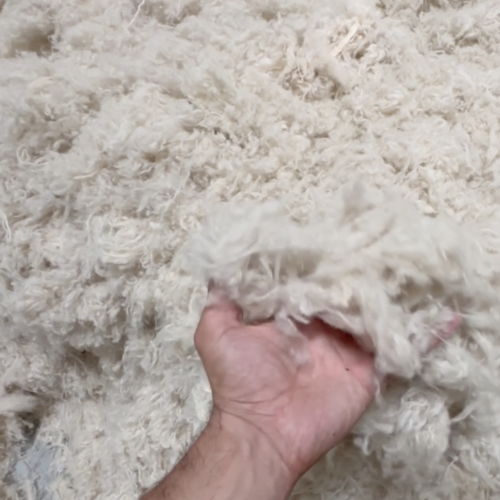
Raw materials
Prato’s cenciaioli
The figure of Prato’s “cenciaioli” represents an ancient tradition in textile regeneration, dating back to at least the nineteenth century. This practice historically allowed for the transformation of discarded clothing and fabrics into new materials, ensuring a form of circular economy that is now considered a model of sustainability.
Today Prato continues to be an international hub of excellence for textile recycling, where waste not only becomes regenerated yarns for fashion and home furnishings, but is also transformed into innovative materials for construction and other industrial applications. The production of regenerated wool in particular offers significant ecological benefits, such as reducing the use of dyes and natural resources, meeting the growing demand for sustainable fashion.
In addition to being environmentally sustainable, the processing also helps decrease the demand for virgin wool, reducing pressure on ecosystems and emissions from sheep farming. Prato is indeed an example of excellence in the regenerated textile sector, promoting models of circular economy and slow fashion for a more ethical and resource-conscious fashion industry.
The “passing”
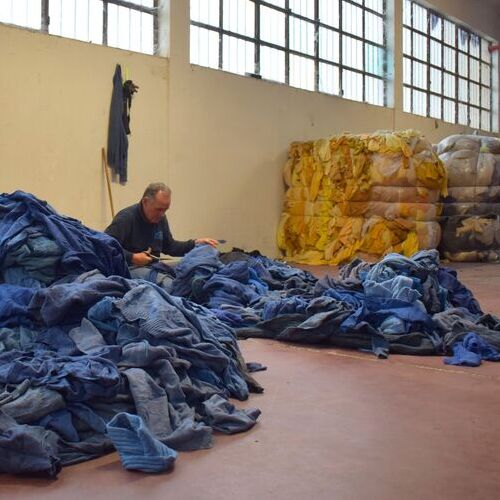
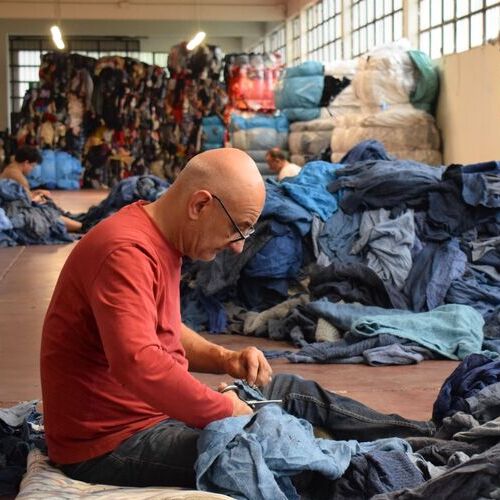
The process begins with the sorting of rags (known locally in Prato as “Cenci”) sourced from all over the world. The sorting involves manually classifying and selecting wool garments based on color, composition, and fineness.
This operation, called “passing”, requires extraordinary perceptive ability, as the ragpicker must identify the composition of the fabrics with touch, smell and sight, even using the sound of the tear to recognize the fibres.
Processing
The rag-pickers work sitting in a traditional “pillow” position, with rags arranged around them, separating them by type and colour. The only tools used are hands and scissors, with which they remove buttons, zips, labels and non-textile details to start the tearing phase.
The transformation of rags
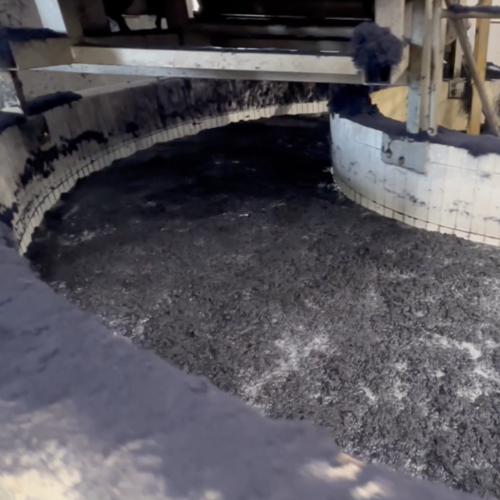
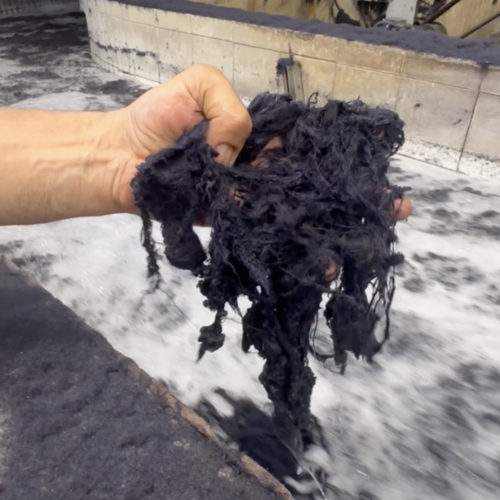
Wet shredding is a fundamental process in the recycling of regenerated wool in Prato, which aims to recover fibers from old garments, minimizing the environmental impact. In this process, water plays a crucial role in facilitating the opening of fibers, reducing dust, and improving the overall cleanliness of textile materials. The wool, coming from discarded garments, initially goes through a sorting phase, where it is selected and prepared based on color and type, reducing the need for further dyeing that would consume water and energy resources.
After sorting, the selected material is wetted and subjected to a mechanical process with machinery equipped with teeth and blades, which gently opens and separates the fibers. This “wet” technique reduces friction and allows for the production of more homogeneous fibers, suitable for trimming and subsequent processing. The use of water also facilitates the removal of impurities, improving the quality of the final product that will then be transformed into new fabrics for high-end knitwear and clothing.
Our products
Regenerated wool
Goritex Commerciale srl produces and offers regenerated mechanical wool in a wide range of colors, categorized into two grades based on fiber fineness: Fine and Ordinary.
This raw material is suitable for producing various types of yarns for knitwear, weaving, and upholstery.